Board games for one
Live opinions. Not shop copy.
Ask an outsider about playing board games alone, and they will usually make a joke about playing under a blanket or assume it sounds terribly lonely.
Inside the tabletop hobby, solo gaming is one of the fastest-growing and most passionate corners of the entire scene. In a world where our workdays and evenings are dominated by glowing computer and phone screens, an analog solo game offers something unique: tactile physical manipulation, rich spatial puzzles, and deep narrative campaigns without having to negotiate schedules with three other busy adults.
You make a pot of tea, put on a soundtrack, lay out the map, and play at your own exact pace.
Here is an honest guide to what actually works alone, what fails completely, and how to avoid wasting money on cardboard that gathers dust.
The Quiet, Meditative Solos
These games have a small footprint, set up in under two minutes, and give your brain a deeply satisfying spatial or combinatorial workout.
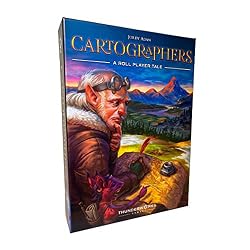 Cartographers: You are a royal cartographer mapping newly reclaimed northern lands for Queen Gimnax. Each turn a card reveals a polyomino shape and a terrain type (forest, village, farm, water, or monster). You draw the shape onto your parchment grid with colored pencils, racing to meet four shifting seasonal scoring edicts. It is quiet, relaxing, completely portable, and infinitely replayable.
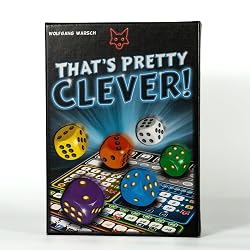 That’s Pretty Clever (Ganz schön clever): A "roll-and-write" dice game designed with Swiss-watch precision. You roll six colored dice and draft three of them to check boxes on your score sheet. The magic is in the cascade effects: ticking a box in the yellow zone triggers a bonus mark in the blue zone, which unlocks a fox in the green zone. Chaining these combos in solo play feels as satisfying as cracking a tricky puzzle.
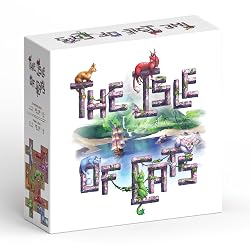 Isle of Cats: Includes a dedicated solo system using an artificial opponent called the "Sister." A mini-deck forces you to prioritize different cat colors and blocks rooms on your ship, forcing you to solve spatial problems under tight constraints rather than just passively collecting tiles.
Atmospheric Survival: Sometimes Better Alone
There is a category of heavy cooperative games that are technically designed for groups, but many veteran hobbyists actively prefer playing them completely solo.
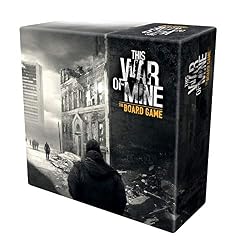 This War of Mine
Adapted from the grim 11 bit studios video game, you control a group of civilian survivors trapped in a besieged, war-torn city. You spend daytime hours managing hunger, sickness, and depression inside your crumbling tenement house; at night, you send a survivor scavenging through ruined hospitals and sniper-infested alleys.
- Why it is better alone: In a group, the intense moral dilemmas (Do we steal penicillin from an elderly couple? Do we risk starving our children to help a neighbor?) inevitably degenerate into intellectual group committee debates that break the mood.
- Played alone, in a quiet room with the atmospheric soundtrack playing, the weight of the moral choices is intensely personal and haunting.
- Survival tip: Protect your clean water and food supplies above all else. Newcomers almost always lose by day four because they prioritize weapons over drinking water.
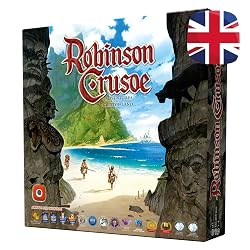 Robinson Crusoe: Adventures on the Cursed Island
An unforgiving survival game where a deserted island tries to kill you in a dozen creative ways. You are building shelter, inventing tools, fighting off predators, and bracing against blinding winter blizzards.
Playing solo lets you plan out the entire camp's labor without someone second-guessing your resource allocations, giving you the feeling of a solitary castaway fighting nature.
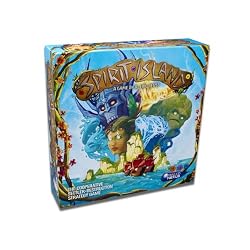 Spirit Island
One of the most celebrated heavy strategy games in modern history. You play primordial nature spirits defending your island against colonial invaders. Invaders explore, build settlements, and ravage the land in predictable mathematical cycles; you play card powers across slow and fast phases to terrify them off the coast.
It features zero luck and infinite strategic depth. In solo mode, you can pilot a single spirit or run two spirits simultaneously to discover intricate elemental combos.
The Narrative Campaign Solos
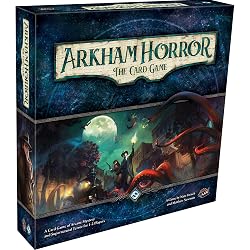 Arkham Horror: The Card Game: Playing "true solo" (controlling a single investigator) turns the Lovecraft mystery into an intense, knife-edge survival horror experience where you must be fast, stealthy, and efficient. If you prefer deck synergy, playing "two-handed" (controlling two investigator decks side by side) gives you the full group experience without scheduling conflicts.
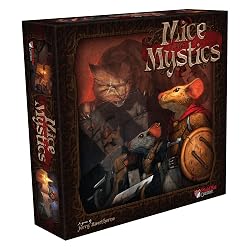 Mice and Mystics: If you want a light, charming story-book adventure where miniature mice fight through castle drains and kitchens, you can easily control the entire adventuring party yourself like an interactive fairytale.
What NEVER Works Solo
Do not waste your money trying to play these alone:
- Hidden Traitor and Social Deduction Games: Games like Secret Hitler, Battlestar Galactica, or The Resistance. The entire fun rests on human deception, eye contact, and spotting lies. With no other humans, there is literally no game.
- Dexterity Party Games: Pulling blocks out of Jenga alone has zero stakes and zero drama.
- Lazy "Beat Your Own Score" Variants: Be wary of multiplayer Eurogames where the publisher tacked on a last-minute solo rule that simply tells you: "Play the normal game alone; if you score 60 points you are an amateur, 90 points you are a master." A great solo game needs an active adversary, a ticking clock, or a puzzle that fights back.
The Digital and Tabletop Simulator Escape Hatch
Heavy hobby games like Gloomhaven, Mage Knight, or Terraforming Mars are legendary solo experiences, but they come with real real-world barriers: they cost over $100, their boxes weigh twenty pounds, and setting them up takes forty minutes on a dining room table that you cannot use for eating all week.
If table space or budget is an issue:
- Gloomhaven Digital (Steam): The official PC adaptation automates all monster AI cards, health math, and dungeon setup, letting you experience the tactical campaign in slick 3D.
- Tabletop Simulator (PC): A virtual physics sandbox on Steam that hosts community-created scripted mods for almost every major solo game (including Arkham Horror LCG and Mage Knight), letting you test a game thoroughly before committing your shelf space.
Where to Look Next
Do not rely on the back of the box at your local toy store. Visit BoardGameGeek (BGG), filter games by "1 Player," and specifically check the "1 Player Guild" forums. Live opinions from people who play solo every week will save you hundreds of dollars in shelf regrets.
As an Amazon Associate we earn from qualifying purchases.