Board games: Buy this, not that
Direct swaps and upgrades from players who owned both.
Before spending fifty or eighty dollars on a board game box, you should listen to the people who bought it, played it twice, and watched it gather dust on their shelf.
Tabletop marketing is notoriously good at selling an aesthetic rather than a play experience. Beautiful miniatures, evocative box art, and familiar licenses frequently disguise clunky rules, broken player counts, or gameplay that is completely different from what the cover promises.
Here are direct, tested swaps from experienced players who owned both boxes, explaining what to pick instead and why.
Buy 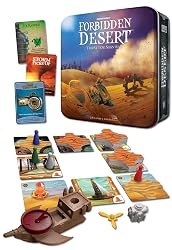 Forbidden Desert instead of
 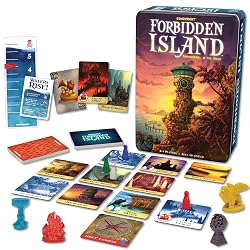 Forbidden Island
Both games were designed by Matt Leacock as cooperative family survival games in metal tins, but Forbidden Desert is the refined second draft that fixed the original's fatal flaws.
- Why Forbidden Island stumbles: In Island, tiles simply flip from dry to flooded, and then vanish into the ocean when drawn again. If bad card draw floods Fools' Landing or an artifact tile early, the game can become mathematically unwinnable before you have taken four turns. At two players, the flooding outpaces your movement.
- Why Forbidden Desert is superior: Desert replaces static tile flipping with a dynamic shifting storm. The tiles move like a physical sliding 15-puzzle, depositing layers of sand that block movement. You have to dig through sand dunes, find ancient gear, shield your team against dehydration when the sun beats down, and unearth four parts of an ancient solar airship.
- The verdict: Desert offers vastly superior decision-making, genuine cooperative tension, and scales far better at two or three players.
- The next step: If Forbidden Desert is a hit with your kids or partner, consider Forbidden Sky. It moves the survival to a floating platform where you assemble an actual conductive electrical circuit to launch a rocket. Note: Sky is noticeably harsher with lightning strikes and wind gusts.
Buy 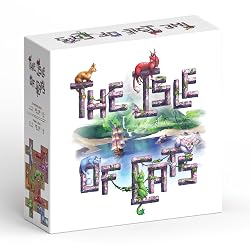 Isle of Cats instead of
 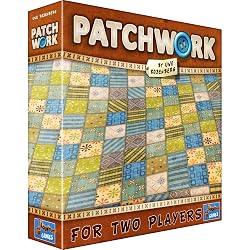 Patchwork
Patchwork is a masterclass in clean polyomino design, but it is purely abstract: buttons, cardboard patches, and a time track.
- If you love the spatial satisfaction of fitting odd geometric shapes into a personal board, but you want rich theme, artwork, and strategic layers, Isle of Cats is the ideal upgrade.
- You are sailing to a mythical island to rescue colorful cat families before the dark lord Vesh arrives. You draft cards each round using fish as currency, balance saving cats with completing secret lesson cards, discover ancient treasures, and fit cats into rooms on your boat grid.
- Bonus: Isle of Cats includes both a full gamer mode with card drafting and an accessible family mode that strips away the complex drafting for younger kids, plus a well-tuned solo mode.
Buy 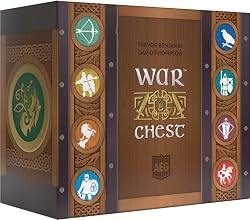 War Chest instead of the casual "starter five"
Almost every mainstream list of beginner games recommends the exact same five casual titles: Patchwork, Star Realms, 7 Wonders Duel, Wingspan, and Carcassonne. They are all fine games, but if you have played chess or tactical video games, they can feel lightweight after a dozen plays.
- Why War Chest: If you want a two-player game with real tactical grit, War Chest delivers. It uses heavy, poker-quality weighted chips and bag-building to simulate battlefield command.
- You draft distinct military units (like Archers, Knights, or Berserkers), draw chips blindly from a bag, and discard chips to maneuver, recruit, or strike on a hex board. It plays in 30 minutes, has zero downtime, and provides the deep tactical satisfaction of chess without the boring memorized opening books.
- Essential expansion: Pick up the Nobility expansion once you have mastered the base units. Its royal decree cards give new tactical options to your royal token and inject great variety.
Buy 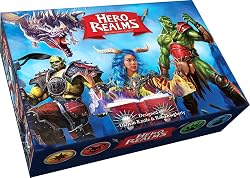 Hero Realms if
 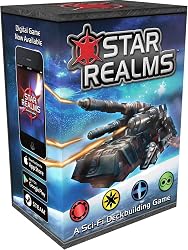 Star Realms space fleets leave you cold
Star Realms is one of the fastest, most satisfying deck-builders ever made, but many players bounce hard off cold gray spaceships, sci-fi terminology, and futuristic faction names.
- Hero Realms is built on the identical fast deckbuilding engine by the same designers, but clothes it in classic high fantasy.
- Instead of Trade Federation dreadnoughts and Blob fighters, you are recruiting elven archers, casting fireballs with wizards, and summoning undead champions.
- It also supports character packs that let you start the game as an asymmetric Fighter, Thief, Cleric, Ranger, or Wizard, and offers cooperative campaign expansion packs where you team up to fight dragons and demon bosses.
Lovecraft: Pick the job, not the box
When newcomers decide they want an atmospheric game based on H.P. Lovecraft's cosmic horror, they often buy the biggest box on the shelf (usually Eldritch Horror) and end up overwhelmed by a three-hour rulebook struggle.
Match the game to your actual table:
- Buy Mansions of Madness (2nd Edition) if you want an atmospheric detective story. A companion tablet app acts as the Dungeon Master, playing creepy sound effects, generating haunted house maps, and spawning cultists. You can teach anyone the rules in ten minutes.
- Buy Arkham Horror: The Card Game if there are two of you wanting a deep, serialized story campaign where your character carries scars, trauma, and upgraded equipment across months of play.
- Buy Eldritch Horror only if you have a group of four dedicated players ready to spend three hours pushing back a global apocalypse, and you are prepared to buy the Forsaken Lore expansion immediately to fix the base game's repetitive card decks.
- Read the full breakdown in Lovecraft on the table.
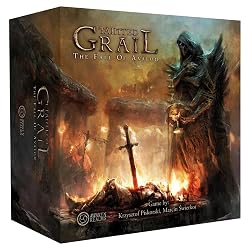 Tainted Grail versus
 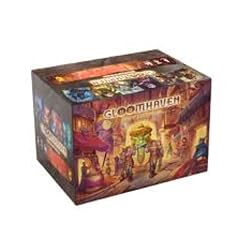 Gloomhaven: Story versus Tactics
Both games represent the pinnacle of massive, heavy hobby gaming boxes with hundreds of hours of campaign content, but they serve completely opposite mental appetites.
- Gloomhaven is tactical combat chess: You are playing an intricate puzzle of hand management, initiative timing, and card optimization. You calculate exact damage, monster AI steps, and movement hexes. The story and world-building are thin, functional window dressing connecting dungeon crawl fights.
- Tainted Grail is grimdark narrative exploration: Set in a dying, corrupted Arthurian Britain, it is an interactive dark novel. You explore an open map, uncover haunting story passages in a thick exploration journal, and make difficult moral choices. The combat and diplomacy use cards, but the real draw is uncovering the tragic lore of the world.
- The rule: If you want crunchy tactical combat math, buy Gloomhaven. If you want a grim, unforgettable story where you get lost in the writing, buy Tainted Grail.
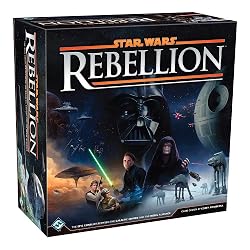 Star Wars: Rebellion versus
 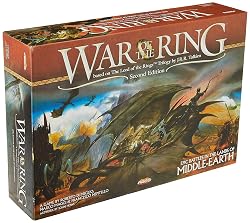 War of the Ring
If you want a massive, cinematic, three-to-four-hour asymmetric two-player confrontation:
- Star Wars: Rebellion is the ultimate galactic cat-and-mouse hunt. The Galactic Empire commands legions of Star Destroyers and Death Stars sweeping system by system to locate the hidden Rebel base. The Rebel player runs covert guerrilla sabotage missions, stalls for time, and rallies sympathetic planets. It is clean, cinematic, and captures the original film trilogy flawlessly.
- War of the Ring is the grand strategy simulation of Tolkien's War of the Ring. The Free Peoples must withstand overwhelming Sauron armies while the Fellowship creeps toward Mount Doom. It is heavier, more complex, and deeply loyal to the books, but has a steeper rules climb than Rebellion.
Two Critical Warnings Before You Buy
The 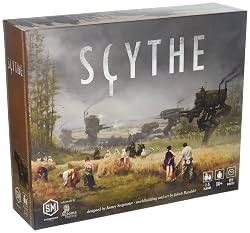 Scythe Warning
Few board games generated more hype than Scythe, thanks to Jakub Rozalski's breathtaking artwork depicting dieselpunk mechs towering over 1920s rural farm peasants.
Thousands of buyers bought the box expecting a bloodthirsty, aggressive wargame of stomping giant robots and destroying rival armies. In reality, Scythe is a low-interaction, Euro-style efficiency engine about producing wheat, trading metal, and optimizing your bottom-row action board. Mechs are primarily used as defensive deterrents and worker taxis; actual combat happens maybe two or three times across a two-hour game.
Know what it is: if you want a tight economic production engine with gorgeous plastic mechs, buy it. If you want a mech battlefield wargame, look elsewhere.
The Monopoly Trap
Monopoly remains the best-selling board game in history, sold in every supermarket on earth. It sells almost purely on nostalgic brand recognition.
People buy it because they do not know what else exists. They sit down, spend three hours rolling dice, landing on random properties, and watching eliminated players sit on their phones until everyone is miserable. They walk away declaring that "board games take too long and cause fights."
Modern board game design solved roll-and-move player elimination four decades ago. Do not buy Monopoly out of habit. Almost any modern title on this site will show you what tabletop gaming actually became.
As an Amazon Associate we earn from qualifying purchases.