Board games: When the box says two
Why 2–5 players on the box is rarely a true two-player game.
Board game publishers love slapping "2–4" or "2–5 players" on the front of a box. It widens their retail market. If a couple walks into a hobby shop, the shopkeeper can hand them almost any game on the shelf and point to the number "2" in small print on the back.
Technically, they are not lying. You can place two sets of components on the table and follow the rulebook without creating a paradox.
Practically, you are often playing a watered-down, uncompetitive, or frustrating shadow of what the designer intended. When a game designed for four is shrunk down to two, critical gears fall out of the machine: market displays stagnate, territory maps feel empty, and negotiation mechanics evaporate completely.
Here is the truth behind several beloved titles whose box says "2," and why their sweet spot lies elsewhere.
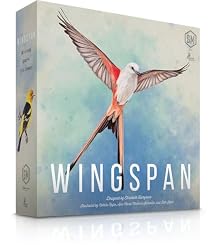 Wingspan: Better at 3
Wingspan is an undeniable modern hit: gorgeous pastel bird illustrations, little speckled egg miniatures, and a cardboard birdhouse dice tower that looks stunning on Instagram. You are attracting birds to three habitats (forest, grassland, wetland) to trigger compounding engine chains.
The box says 2–5 players.
- Why it stumbles at 2: The card market consists of three face-up bird cards in a tray. With four or five players, cards rotate constantly as people draft them. With two players, if neither player wants any of the three current birds, the market display completely freezes. You spend turns blind-drawing from the deck instead, turning the game into heads-down, parallel multiplayer solitaire where you rarely look at what your opponent is doing.
- Why it shines at 3: Three players provide the exact sweet spot. Card turnover is healthy, end-of-round goal competitions are tight, and turn downtime is almost zero.
- What about 5 players? A passionate group can easily burn through fifteen games over a holiday weekend, but if anyone at the table suffers from decision paralysis, a 5-player game will drag on past two hours.
- The fix: If you primarily play Wingspan with two, buy the Birds of Europe expansion. It introduces end-of-round powers and teal/pink cards that actively trigger off the other player's actions, finally injecting meaningful interaction into a two-player match.
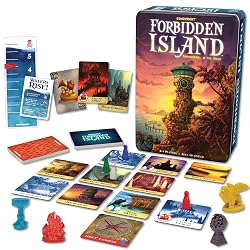 Forbidden Island: Better at 4
In this cooperative game from Matt Leacock, players race across an island sinking into the sea, collecting four ancient relics and racing to Fools' Landing for a helicopter escape.
The box says 2–4 players.
- Why it is brutal at 2: The game relies on specialized character roles working in tandem: the Pilot flies across the board, the Diver swims through flooded tiles, the Engineer shores up two tiles for one action, and the Messenger passes cards without being in the same space. When you only have two players on the board, the flooding rate of the Waters Rise cards easily outpaces your physical ability to traverse the island and trade cards.
- Countless couples report losing six or eight games in a row before getting all four relics, assuming the game is impossible. It is not impossible; it was simply tuned for four specialist pawns covering all four quadrants of the map.
- The verdict: If you want a two-player cooperative survival game, skip Island and buy Forbidden Desert, which balances team size far more gracefully. Read more on that in Board games: Buy this, not that.
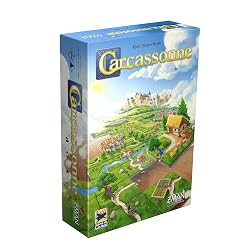 Carcassonne: The Split Personality
Carcassonne is famous as the gentle gateway game of medieval French pastoral scenery. You draw a square terrain tile, place it next to existing tiles, and optionally place a little wooden follower (a meeple) on a road, city, or monastery.
Carcassonne plays 2–5 players, but it is effectively two completely different games depending on whether there are two chairs filled or four.
- At 4–5 players: It is a light, relaxed, somewhat chaotic family game. You draw a tile, look for a nice place to put it, hope someone does not block your church, and drink tea. Planning more than one turn ahead is pointless because the board changes four times before you go again.
- At 2 players: It transforms into a ruthless, zero-sum, deeply calculable tournament duel. Highly skilled players know the exact count of each tile type remaining in the bag. You place tiles not just to build your own points, but to attach impossible-to-complete cathedral walls to your opponent's cities, trapping their meeples on the board for the rest of the game so they run out of pieces.
- Both ways are valid, but you must know what you are sitting down to play. If you expect a peaceful game of building pretty towns with your partner, a cutthroat 2-player Carcassonne match can start arguments before Age 2.
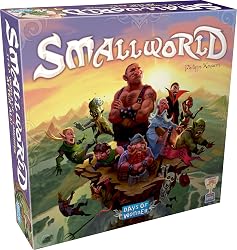 Small World: Better at 3–4
Small World gives you a map of fantasy kingdoms that is literally too small for everyone living in it. You combine goofy fantasy races with random special powers (like Berserk Skeletons, Flying Halflings, or Merchant Trolls) and conquer territories until your empire peaks, at which point you abandon them into "decline" and draft a brand-new race.
- Why 2 is flat: The map has a dedicated 2-player side, but the core psychological tension of Small World is the balance of power. If one player picks a runaway dominant race combo, a third player is required to gang up and check their expansion. At two players, the game becomes a binary mathematical race with zero politics.
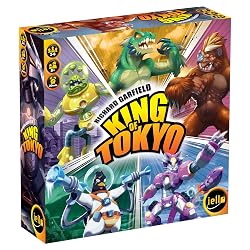 King of Tokyo: Better at 4–6
Think of King of Tokyo as Yahtzee meets Godzilla. Giant monsters brawl in the streets of downtown Tokyo, rolling dice for claws (damage), hearts (healing), energy cubes, and victory points.
- Why 2 is pointless: The entire game mechanics hinge on the "Tokyo City" space. The monster inside Tokyo attacks everyone outside simultaneously, and every monster outside attacks the one inside. You cannot heal while inside Tokyo, creating a nail-biting push-your-luck decision: do you stay inside for bonus points, or yield the city when someone punches you?
- At two players, there is only one monster outside. The push-your-luck risk-reward dynamic disappears. It becomes two people taking turns rolling dice and subtracting health points.
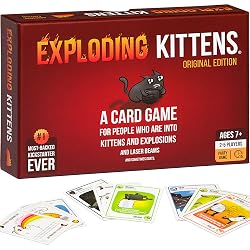 Exploding Kittens: Better at 4–5
A high-tension Russian roulette card game with goats, laser pointers, and exploding kittens.
- At two players, card counting is trivial, you always know who holds the defuse card, and the strategic bluffing evaporates. At four or five players, the frantic hot-potato tension of "who drew the kitten, who has a skip, and who can force the next player to take two turns" turns into a laugh-out-loud table spectacle.
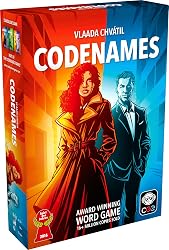 Codenames: Best at 4 vs 4
Codenames is one of the best party games ever created, but the box claims you can play with 2.
The two-player rules in the original box are a clunky cooperative variant with a dummy deck. What makes Codenames legendary is the team dynamic: watching two teammates passionately argue over whether the clue "Cold 3" means Antarctica, Penguin, or Flu, while their spymaster sits across the table trying to maintain an absolute stone poker face.
If you want Codenames for two, do not play the variant in the base box. Buy Codenames Duet, which was built specifically as a cooperative two-player puzzle.
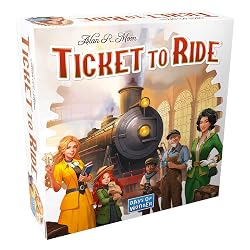 Ticket to Ride: When Maps Betray You
Ticket to Ride is fantastic for families, but huge maps like USA or Europe are sprawling continents. With two players, you will often play for an hour without ever crossing paths, claiming routes in separate corners of the country until the game ends without conflict.
- The Quarantine Hack: During lockdowns, some couples devised a clever variant where each person controls two complete sets of trains (e.g., one person plays Red and Green; the other plays Blue and Yellow) to artificially populate the rails.
- The Real Solution: If you want Ticket to Ride for two, skip the big USA/Europe boxes and look for maps specifically drafted for small counts, like Ticket to Ride: Nordic Countries or the Switzerland / India map expansion. These contain tight bottleneck mountain passes and single-track tunnels designed to force painful route-blocking decisions.
As an Amazon Associate we earn from qualifying purchases.