Board games: The crowd favorites
The classics, the heavy-hitters, and which ones actually belong on your shelf.
Walk into any hobby shop or board game cafe, and you will see the same legendary titles occupying the bestseller shelves. You have probably heard friends passionately argue over them until 2 a.m., heard horror stories of broken alliances, or wondered whether a three-pound box with an intimidating rulebook is actually worth eighty dollars of your hard-earned money.
Tabletop marketing copy always promises the same things: "epic adventure," "accessible family fun," and "infinite replayability." The reality at the table is much sharper. Some games deliver electric, laugh-until-you-cry evenings; others degenerate into three-hour mathematical slogs that leave your guests checking their phones.
Here is an honest, buyer-focused guide to the crowd favorites and heavy hitters: what they actually feel like to play, who will love them, and which ones deserve a permanent spot on your shelf.
Looking for games tuned specifically for couples? Start with Board games for two. Need direct upgrades from boxes that gather dust? Check Board games: Buy this, not that.
---
The Household Names
These are the boxes that transformed modern tabletop gaming from a niche subculture into a worldwide phenomenon. Almost everyone has heard their names — but are they right for your game night?
 Munchkin
The beer-and-pretzels dungeon brawl.
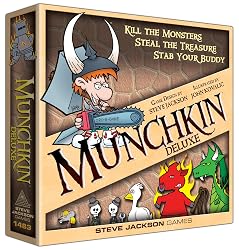
Munchkin strips away the serious storytelling and math of traditional tabletop roleplaying, boiling it down to a single, chaotic impulse: kick open a dungeon door, slaughter whatever absurd monster is lurking behind it, steal its magical loot, and race to reach Level 10 before anyone else.
- The Hook: Pure, unadulterated backstabbing. The cards are packed with hilarious fantasy parodies — you can fight a Potted Plant with a Chainsaw of Bloody Dismemberment while wearing the Boots of Butt-Kicking.
- The Table Reality: When a player reaches Level 9 and kicks open a door to win the game, the entire table unites to sabotage them. Every player unloads their hand of curses, wandering monsters, and monster buffs to drag them down. Sessions can become fiercely contested battles where friends forge desperate 30-second truces only to betray each other on the very next turn.
- Who it is for: Casual gatherings, college dorms, and groups of 4 to 6 friends who want laughs, loud arguments, and zero rules homework.
- The Catch: If your group takes winning too seriously or cannot handle direct player-versus-player sabotage, skip it. It is not Dungeons & Dragons — there is no roleplaying or open narrative here. It is a sharp, chaotic card fight.
 Catan (The Settlers of Catan)
The game that launched modern board gaming.
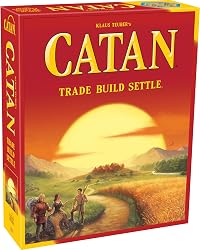
Released in 1995, Catan solved the biggest flaw of vintage games like Monopoly: it eliminated player elimination and kept every player actively engaged on every single turn.
- The Hook: You are settlers colonizing a modular hexagonal island. Each turn, dice determine which hexes produce raw resources — lumber, brick, grain, ore, and wool. You use those materials to build winding roads, expand settlements into cities, and recruit development cards.
- The Magic of Trading: What makes Catan electric is the live trading market. On your turn, you can barter directly with anyone at the table: "I will give you two sheep and a stone right now if you give me one brick." Deals are struck, monopolies are cornered, and the robber token gets placed on your opponent's richest tile to cut off their income.
- Who it is for: The quintessential family-and-friends gateway game for 3 to 4 players. If you have guests who have never played modern board games, Catan teaches them the joy of analog strategy in fifteen minutes.
- The Catch: Because production is tied to dice rolls, an unlucky player can suffer long resource droughts while a rival rolls their lucky 8 four times in a row. If you want pure spatial strategy without dice luck, look to Carcassonne instead.
 Dixit
The dreamlike party game of shared intuition.
If you want a party game that does not rely on loud trivia, awkward charades, or cruel sabotage, Dixit is the antidote.
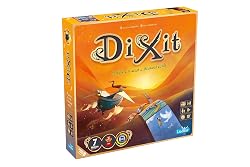
- The Hook: A deck of 84 oversized cards featuring gorgeous, surreal, fairy-tale paintings. Each round, one player is the active storyteller: they pick a card from their secret hand and give a cryptic clue — a single word, a sentence, a movie quote, a line of poetry, or even a sound.
- The Mind Game: Every other player picks a card from their own hand that best matches the storyteller's clue. All cards are shuffled and revealed face-up, and players secretly vote on which card was the original.
- The Genius Scoring Rule: If everyone guesses your card, your clue was too obvious and you get 0 points. If nobody guesses your card, your clue was too obscure and you get 0 points. To score, you need at least one person — but not everyone — to understand your thought process.
- Who it is for: Mixed-generation family nights, creative groups, and players who hate competitive math. It rewards empathy, shared inside jokes, and poetic lateral thinking.
---
Tactical Masterpieces: Brainpower Over Luck
If your table has outgrown casual party games and craves deep, razor-sharp tactical confrontation where the smarter player always wins, these three modern classics are essential.
 Inis
The Celtic clash of myth and kings.
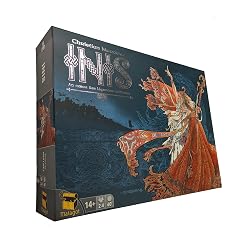
Set in ancient legendary Ireland, Inis is one of the most stunning and mechanically elegant territory-control games ever designed.
- The Hook: You lead Celtic clans across modular, mist-shrouded terrain tiles. Instead of rolling combat dice, every single round begins with a card draft: players draft from a tight deck of 17 action cards, meaning you always have partial knowledge of what tricks your opponents are holding.
- Three Ways to Win: You do not win by crushing armies into dust. You win by meeting one of three distinct victory conditions: being chieftain over territories with six enemy clans, occupying territories with six sanctuaries, or having your clans spread across six different territories.
- The Climax: When you achieve a condition, you take a "Pretender token," announcing to the entire table that you intend to claim the crown. Your rivals get one desperate round to maneuver, fight, or negotiate to dethrone you.
- Who it is for: Groups of 2 to 4 who want the cutthroat tension of a territory duel with zero combat dice, gorgeous artwork, and endless bluffing depth.
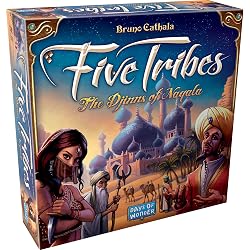 Five Tribes
The desert bazaar mancala puzzle.
Designed by Bruno Cathala, Five Tribes takes the ancient mechanism of mancala and expands it across an Arabian desert board of 30 modular tiles.
- The Hook: In most worker-placement games, you start with an empty board and place meeples down. In Five Tribes, the board starts completely overflowing with colorful wooden meeples. On your turn, you pick up all meeples from one tile and move across the grid, dropping one meeple on each adjacent tile along your path.
- The Cascade: When you drop your final meeple, you pick up all matching-color meeples on that destination tile and trigger their clan power:
- Assassins eliminate enemy meeples from afar.
- Elders summon powerful Djinns with game-breaking unique abilities.
- Builders score immediate victory points based on surrounding blue tiles.
- Merchants draft resource cards from the desert market.
- Viziers grant endgame supremacy points.
- The Table Reality: Every single move changes the topology of the board for the next player. Clearing a tile of all meeples lets you place a camel token to claim ownership of that land permanently.
- Who it is for: Gamers who love spatial puzzles, tactical opportunism, and rich combo-building. Best at 2 or 3 players where board states do not shift too chaotically between turns.
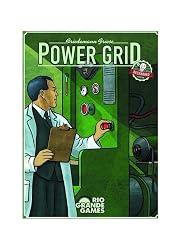 Power Grid
The ultimate ruthless economic auction.
Few games in tabletop history simulate the cutthroat pressure of raw capitalism like Power Grid.
- The Hook: You are an energy tycoon building an electrical power network across Germany or the United States. You compete across three interconnected economic layers: bidding against rivals in live auctions for state-of-the-art power plants, buying fuel from a fluctuating commodities market, and expanding transmission grids into new cities.
- The Dynamic Commodity Market: The resource market is completely reactive. If three players buy up coal this round, the coal supply shrinks and the price per barrel skyrockets next turn, making green wind and nuclear power suddenly look like bargains.
- The Rubber-Band Economy: Power Grid features the best catch-up mechanic in board gaming: the player currently in first place goes last in the resource market and pays the highest fuel prices, while the trailing player buys fuel cheapest and connects new cities first.
- Who it is for: Anyone who loves auction mechanics, financial tightrope-walking, and spatial route planning with zero hidden luck. A stone-cold classic.
---
Heavyweight Titans: Immersive Campaigns & Big Engines
When your weekend calls for a dedicated three-hour session, a table covered in hundreds of cardboard tokens, and a strategic journey you will talk about for weeks, these boxes deliver.
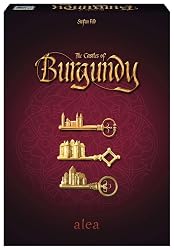 The Castles of Burgundy
The masterclass of dice placement.
Designed by Stefan Feld, The Castles of Burgundy is widely regarded by veteran hobbyists as one of the top ten greatest Eurogames ever created.
- The Hook: You are a 15th-century French prince developing your personal estate along the Loire Valley. Each turn you roll two dice. The magic is that the dice do not test your luck; they are action tokens that dictate which hex tiles you can take from the central depot and where you can place them on your private duchy.
- The Combo Engine: Every tile you place immediately triggers a benefit:
- Livestock tiles score points that multiply whenever matching animals share a pasture.
- Riverboats advance your turn order and claim valuable trade goods.
- Silver mines generate steady silver nuggets to purchase special black-market tiles.
- Castles grant an immediate free bonus turn.
- Who it is for: Strategy lovers who want a deep, satisfying engine-building puzzle with virtually no downtime and zero player hostility. You draft from a shared pool, but your primary joy is watching your personal French estate assemble into a high-scoring masterpiece.
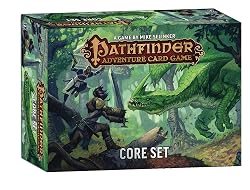 Pathfinder: The Adventure Card Game
The tabletop fantasy RPG in a box — without a Dungeon Master.
If you love the character progression, dice-rolling thrills, and monster-slaying loot of fantasy roleplaying games, but nobody in your group wants to spend twenty hours preparing campaign notes as a Dungeon Master, this card system is your dream.
- The Hook: You choose a persistent character — a Valeros fighter, a Merisiel rogue, an Ezren wizard, or a Kyra cleric. Your character sheet defines your polyhedral dice traits (d4 through d12), skills, and hand size. Your deck of 15 cards is your health, your equipment, and your spells.
- The Campaign Progression: Over sequential 45-minute cooperative scenarios, you explore dangerous locations, defeat summoned henchmen, disarm traps, and corner the scenario villain. When you find a legendary Flaming Longsword or Cure Light Wounds scroll, it stays in your deck. Between scenarios, you spend earned skill feats to permanently upgrade your stats.
- Who it is for: Solos and duos who want an addictive, episodic dungeon-crawling campaign where your hero grows from a fragile novice with a wooden club into an unstoppable dragon-slaying legend across dozens of sessions.
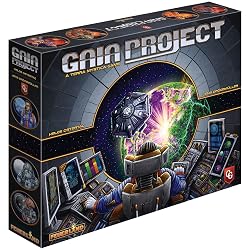 Gaia Project
The galactic grand-strategy titan.
The sci-fi evolution of Terra Mystica, Gaia Project represents the absolute pinnacle of deterministic, zero-luck heavy strategy.
- The Hook: Fourteen completely asymmetric alien species expand across a modular galaxy. You terraform uninhabitable planets to match your native environmental type, construct orbital mines, upgrade them into research labs and grand planetary academies, and advance across six intertwined research trees (Terraforming, Navigation, Artificial Intelligence, Gaiaforming, Economy, and Science).
- Zero Combat, Infinite Tension: There are no dice, no random card decks, and no combat fleets destroying each other. The tension is entirely economic and spatial: claiming strategic planets before a rival reaches them, securing vital power-cycling nodes, and timing your end-of-round scorings with surgical precision.
- Who it is for: Hardcore strategy groups who want three hours of deep, unadulterated cognitive mastery where the best planner always wins.
---
High-Stakes Tabletop Thrillers
When you want an unforgettable party game that replaces polite laughter with cold sweat, racing heartbeats, and white-knuckle adrenaline:
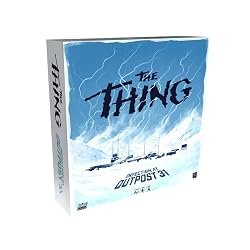 The Thing: Infection at Outpost 31
Cold-blooded paranoia in the Antarctic ice.
Based on John Carpenter's 1982 cinematic horror masterpiece, this is social deduction with genuine cinematic stakes.
- The Hook: Players are researchers trapped in a snowbound Antarctic station during a blinding storm. You must work together to clear rooms, extinguish electrical fires, gather supplies, and prepare the rescue helicopter.
- The Terror: At the start of the game — and again at sector checkpoints — hidden infection cards are dealt. One or more players become "The Thing," secretly working to sabotage the mission, corrupt supplies, or slip onto the escape helicopter disguised as a human.
- The Climax: Blood tests reveal infections, accusations fly, and the final helicopter boarding vote will have your table screaming as you try to figure out which of your closest friends is no longer human.
 Jungle Speed (The Totem Duel)
Lightning reflexes and table-diving chaos.
- The Hook: A deck of cards featuring subtle geometric patterns. Players take turns flipping their cards face-up. The instant two players reveal cards with identical shapes, a duel begins: both players must immediately lunge across the table to grab the wooden totem standing in the center.
- The Table Reality: The patterns are deceptively similar, designed to trigger optical illusions and false alarms. Grabbing the totem by mistake forces you to take all cards from the table as a penalty. When a legitimate match triggers, hands collide, drinks tremble, and everyone at the table roars with laughter.
- Who it is for: The absolute fastest way to wake up a sleepy party. Rules take thirty seconds to explain; energy stays at a fever pitch for an hour.
---
Which Box Should You Buy First?
Match your purchase to your actual game night, not an aspirational fantasy:
- For lively parties with non-gamers: Buy Munchkin if your friends love friendly insults and chaos; buy Dixit if your crowd prefers imagination and inside jokes; pull out Jungle Speed if you want raw physical energy.
- For the ultimate family-and-friends gateway: Buy Catan for live bartering and settlement building; choose Carcassonne if you want zero-dice tile placement.
- For cutthroat tactical duels (2–4 players): Buy Inis for mythic Celtic territory drafting; choose Five Tribes for satisfying combo-building in an Arabian bazaar.
- For the deep strategy weekend: Buy The Castles of Burgundy for comforting, combo-rich French estate optimization; step up to Power Grid for heart-pounding economic auctions; dive into Gaia Project when your group is ready for the ultimate zero-luck space empire.
- For the ongoing tabletop RPG itch: Pick up Pathfinder Adventure Card Game if you want solo or duo character progression without a DM; grab Gloomhaven if you want 100 hours of tactical combat miniatures.
As an Amazon Associate we earn from qualifying purchases.