Board games: What IT offices actually play
From 15-minute lunch duels to cutthroat Friday-night epics.
Walk into any tech startup, software studio, or IT breakroom, and you will almost certainly find a shelf stacked with cardboard boxes. Engineers, product managers, and programmers have an instinctive love for tabletop games: games are rule-based systems, engines of optimization, and structured social puzzles with zero glowing screens.
Yet workplace gaming comes with strict realities that home game nights never face. You have hard time boundaries — a 15-minute mental reset before a standup, a 45-minute lunch break, or a Friday evening pizza session after the sprint closes. You also have office social dynamics: if a game encourages toxic griefing, tomorrow's code review gets awkward; if a game has forty pages of rules homework, nobody opens the box.
Here is an honest buyer's guide to the games that real tech offices play, debate, and wear out to the cardboard: what they actually feel like at the table, their hidden catches, and which ones fit your company shelf.
Looking for games tuned for two colleagues during lunch? Check Board games for two. Want the all-time household classics? Read Board games: The crowd favorites.
---
The 15-Minute Lunch Break Reset
When you and a colleague have twenty minutes before the next architecture review, you need zero setup, zero rulebook friction, and an immediate tactile reset for a screen-tired brain.
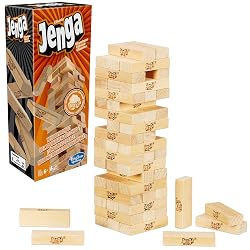 Jenga
The pure physical nerve test with zero rules homework.
Almost permanently present in IT breakrooms and design studios worldwide, Jenga endures because it requires no cognitive setup whatsoever.
- The Hook: 54 precision-crafted wooden blocks stacked into an 18-story tower. Players take turns removing one block from anywhere below the highest completed level and placing it on top. One hand only.
- The Table Reality: As the tower grows taller and looser, conversations die down. The room goes dead silent, punctuated only by collective gasps as a colleague pulls a crucial load-bearing block. When the tower inevitably crashes, the whole room bursts into laughter. It resets in sixty seconds.
- Who it is for: Breakrooms, team icebreakers, and anyone needing a pure physical, laugh-out-loud reset that requires zero explanation for non-gamers.
- The Catch: It makes noise when it falls. If your gaming area is five feet away from colleagues on customer support calls, find a rug or an enclosed kitchen table.
Need a quiet, cerebral 15-minute lunch duel instead? Look to Hive, the pocket abstract duel of bakelite hexagonal insect tiles with zero board setup.
---
The Lunchroom Shootout
When your team has 40 minutes, a table full of burritos, and wants high-energy laughter and social bluffing.
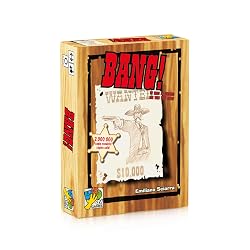 Bang!
The Wild West hidden-role deduction shootout.
Long before social deduction mobile apps took over phones, Bang! was the definitive lunch-hour card shootout.
- The Hook: Everyone at the table receives a secret role card: the Sheriff, the loyal Deputies, the treacherous Outlaws, and a lone Renegade. Only the Sheriff reveals their identity. Everyone else looks each other in the eye, grabs a hand of bullet cards, and tries to figure out who is shooting at whom.
- The Table Reality: You sit down believing you know your colleagues, only for the mild-mannered frontend developer to shoot your Sheriff with a Volcanic shotgun on turn two. Bluffing is constant: Outlaws pretend to protect the lawman right up until the lethal crossfire.
- Who it is for: Groups of 4 to 6 people who love psychological reads, Western gunfight tropes, and fast card play.
- The Catch: Never play Bang! with 8 players. While the box technically supports up to 8, turns slow down, distance rules become punishing, and eliminated players sit waiting too long. Cap the table at 5 or 6 players to keep the shootout lightning fast.
---
The Zero-Conflict Teamwork Engine
If cutthroat player-versus-player sabotage creates real-world workplace friction, cooperative games are the ultimate team-building antidote.
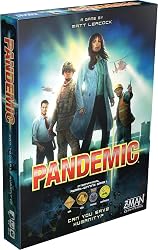 Pandemic
The gold standard of cooperative crisis triage.
Designed by Matt Leacock, Pandemic pits the entire room against an unforgiving, mechanical disease-spread engine. You win together, or the world burns together.
- The Hook: Four deadly viruses break out across a world map. Players step into distinct specialist roles — the Medic wipes out entire virus hotspots in a single turn, the Dispatcher teleports teammates across continents, and the Researcher shares critical cure data.
- The Engineering Appeal: Pandemic feels like live production incident response. You have finite action points per turn, infection rates that accelerate logarithmically after every Epidemic card, and cascading outbreaks that threaten to overwhelm your infrastructure. It requires rigorous risk assessment, triage, and clear communication.
- Who it is for: Teams of 2 to 4 who want collaborative problem-solving without interpersonal hostility. If your team loves debugging complex systems under time pressure, Pandemic is an instant classic.
- The Catch: "Quarterbacking" (the alpha gamer syndrome). An outspoken veteran player can easily take over and dictate everyone's moves. To keep Pandemic magical, establish a team rule: each player has complete autonomy over their own specialist's decisions.
---
The Cold-Blooded Bluffing Auction
When you want to see how well your project manager and senior engineers can lie with a straight face.
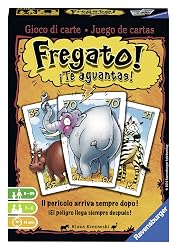 Kuhhandel (You're Bluffing!)
The German auction classic of poker faces, secret bribes, and animal noises.
Designed in Germany, Kuhhandel is one of the sharpest, most hilarious bidding card games ever published. It features zero dice and 100% human psychology.
- The Hook: Players auction off farm animals to collect complete quartets of matching species (horses, cows, pigs, donkeys). Each animal quartet multiplies your endgame score.
- The Blind Trade: The genius of Kuhhandel is the "cow trade" duel. If two players own cards of the same animal, one can challenge the other by sliding facedown money cards across the table: "I am offering this for your donkey." The challenged player can either accept the mystery cash, or slide their own blind counter-offer. Both reveal their cards simultaneously: the higher bidder takes the animals, but both players keep the cash they were offered.
- The Catch: Money cards include zero-value bluff cards. You can slide four thick cards across the table that are completely worthless, bluffing your opponent into handing over their prized prize cow for zero dollars.
- Buyer Tip: Look for the classic edition with the original folk-art illustrations. The vintage animal drawings have immense rustic personality and humor that newer streamlined editions lose.
---
The Worker-Placement Math Engine
For analytical minds who love combinatorial optimization, economic engines, and calculating compound point multipliers over a 90-minute session.
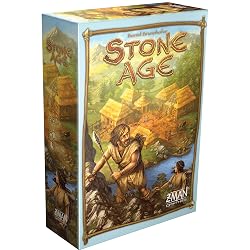 Stone Age
The masterclass of worker allocation and prehistoric engine building.
Stone Age is the gold standard gateway into worker-placement Eurogames — accessible enough to teach in ten minutes, but mathematically rich enough to satisfy veteran developers.
- The Hook: You guide a prehistoric tribe from archaic stone tools into an advanced civilization. Each round, you deploy wooden worker meeples across the village and surrounding wilderness: send hunters to gather food, miners to the quarry for stone, or pairs to the hut to expand your population.
- The Three Strategic Engines: You cannot pursue everything. Winning requires focusing your economic engine:
- The Population Rush: Rapidly growing your workforce and claiming civilization cards that score bonuses per tribe member.
- The Tool & Building Sprint: Investing heavily in permanent tool upgrades to guarantee resource rolls and erecting high-value stone huts.
- The Agricultural Leap: Climbing the farm track to permanently automate your tribe's food supply, freeing every worker for endgame victory point collection.
- The Table Reality: While Stone Age has no direct combat, player interaction is razor-sharp through indirect spot blocking. Taking the last tool slot or drafting the specific civilization card your neighbor needed can derail their plans for three rounds.
- The Catch: At 2 players, the board can feel overly spacious and repetitive. Stone Age shines brightest at 3 to 4 players, where competition for worker spaces is cutthroat and resource scarcity is real.
---
The Friday Night War Room
When the sprint is finished, the pizza arrives, and 5 or 6 colleagues want to settle in for an epic multi-hour campaign of territorial conquest and grand strategy.
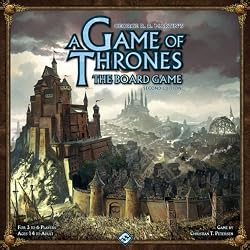 A Game of Thrones: The Board Game
The six-hour masterclass in diplomacy, simultaneous orders, and cold betrayal.
Based on George R.R. Martin's novels, Fantasy Flight Games' second edition is widely considered one of the greatest grand-strategy wargames ever manufactured.
- The Hook: Three to six players take command of the Great Houses of Westeros (Stark, Lannister, Baratheon, Greyjoy, Tyrell, and Martell). There are no dice. Combat and territory control are decided entirely by military positioning, house character cards, and secret negotiation.
- The Simultaneous Planning Phase: Every round, all players simultaneously place face-down order tokens on every territory containing their troops — March orders, Defense orders, Support orders, and Raids. When tokens are revealed, the entire board erupts into unexpected skirmishes, surprise flanking attacks, and broken treaties.
- The Table Tension: Neighboring players forge desperate non-aggression pacts, agreeing to support each other against the iron fleet, only for one player to execute a devastating march directly into their ally's capital on round six.
- Who it is for: Dedicated gaming crews of 5 to 6 who want an unforgettable, high-stakes evening of grand strategy and deep table talk.
- The Catch: This is not a casual lunch game. A full six-player battle takes 4 to 6 hours, and the rules reference requires dedicated study.
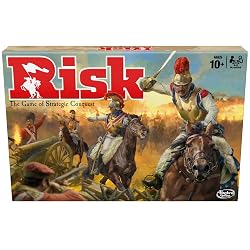 Risk
The classic global strategy conqueror that inspired early programmers.
First published in 1957, Risk was the foundational strategy game for generations of engineers (Mark Zuckerberg famously programmed a networked multiplayer version of Risk before starting Facebook).
- The Hook: Simple, sweeping global conquest. You draft infantry, cavalry, and artillery battalions, fortify continental choke points, and roll combat dice to sweep across borders from Kamchatka to Western Europe.
- The Ergonomics Catch: Vintage Risk editions suffered from tedious hours of stalemates and fiddly plastic figurines. Modern editions streamline the rules with Secret Mission cards to cap game duration, and clean graphic tokens make reading the board instantaneous.
- Who it is for: Casual Friday groups who want pure, nostalgic, beer-and-pretzels world domination without heavy Eurogame math.
---
Which Box Should Your Office Buy First?
Match your purchase to your team's real-world time slots and social dynamic:
- For 15-minute mental breaks between meetings: Buy Jenga for pure physical laughs and zero rules; grab Hive if you want an elegant, quiet two-player chess-like duel.
- For fast-paced lunchtime shootouts (4–6 players): Buy Bang! for Wild West deduction and friendly cross-table banter.
- For collaborative, zero-friction team building: Buy Pandemic to experience tense crisis triage where everyone wins or loses together.
- For lunch-hour psychology and laughing at corporate bluffs: Buy Kuhhandel for hilarious blind trades and secret bids.
- For analytical minds who love engine-building math (3–4 players): Buy Stone Age for satisfying worker-placement combos and resource optimization.
- For epic Friday night after-hours campaigns (5–6 players): Pick up A Game of Thrones: The Board Game for an unforgettable evening of hidden orders, alliances, and cutthroat diplomacy; choose Risk for nostalgic world conquest.
As an Amazon Associate we earn from qualifying purchases.